Fynq
Fynq The Five Search Merchandising Strategies in Fynq
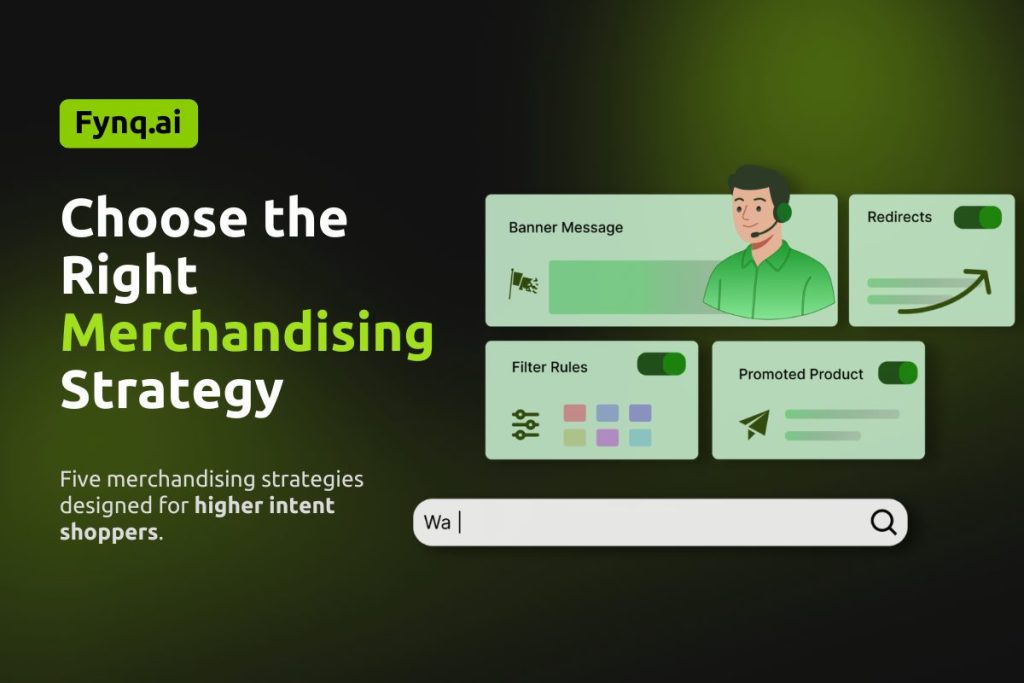
Fynq offers four different search merchandising strategies. Each one is designed to influence shopper behavior in a specific way. Some help highlight products. Some help guide choices. Others help remove friction completely.
Understanding what each strategy does will help you convert more shoppers from search without changing your catalog or pricing.
Where to Find the Merchandising Section in Fynq App?
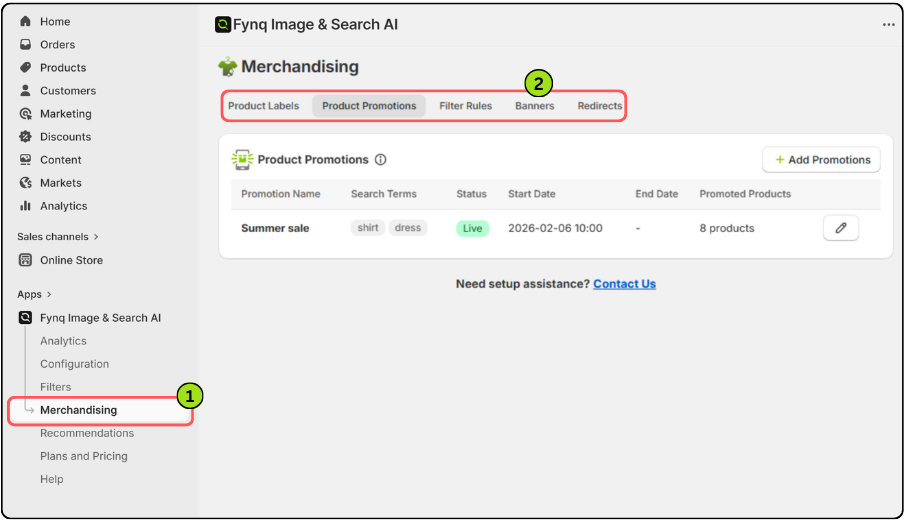
The Merchandising section in the Fynq app is where you manage all search-based promotions and controls. Each merchandising strategy has its own dedicated tab, making it easy to set up and manage independently.
To access Merchandising in the Fynq app:
- Open the Fynq app
- Navigate to Merchandising
- Choose the required tab based on what you want to set up.
Product Labels (that make key products stand out instantly)
Product Labels let you highlight key selling points directly on product cards, so shoppers can spot what matters without digging into details. A simple label like “New Arrival,” “Limited Stock,” or “On Sale” can add clarity, urgency, and confidence while browsing search results.
This is especially helpful when shoppers are scrolling fast or comparing similar products. Labels act as quick visual cues that guide decisions and improve the overall shopping experience without changing your catalog structure.
Product Labels work best when:
- You want to highlight new, popular, or high-priority products
- You’re running a sale and want promotions to stand out
- You want to create urgency (like low stock) or set expectations (out of stock)
Shoppers need quick context while scrolling search results.
Read More: ⏩ What Are Product Labels and Why They Matter
Please Note: Only the first merchandising strategy, i.e., Product Labels, is available on the Free and Basic tier plans. All other merchandising strategies require the Standard2K plan or higher.
Product Promotions (that help shoppers find the right product faster)
Product Promotions allow you to push selected products higher when shoppers search for specific terms. This works well when you already know which products perform best or align closely with shopper intent.
Instead of making shoppers compare many similar items, you guide them toward products that are more likely to convert. This reduces hesitation and improves purchase confidence.
Product Promotions are powerful when:
- A search term matches a few strong products
- You want to push high-margin or fast-moving items
- You want consistent visibility for priority products
Read More: ⏩ How to Use Product Promotions
Filter Rules (that guide shoppers without limiting choice)
Filter Rules help shape search results without promoting individual products. This strategy works by pre-applying filters, so shoppers see a more relevant set of products from the start.
This is especially useful when shoppers are open to choice but still need guidance. By narrowing results intelligently, you help them discover products faster while keeping options open.
Filter Rules help convert when:
- Search results feel too broad or cluttered
- You want to promote a product segment or theme
- Product attributes matter more than specific SKUs
Read More: ⏩ How Filter Rules Work
Visual Banners (that influence decisions before shoppers scroll)
Banners add visual context to search result pages. They allow you to communicate offers, campaigns, or messages at the exact moment shoppers are searching.
A well-placed banner sets expectations early. It helps shoppers understand what is available and why they should explore further, even before looking at individual products.
Banners are effective when:
- You are running sales or campaigns
- You want to promote collections or new arrivals
- Visual messaging supports conversion goals
Read More: ⏩ How to Create Search Banners
Redirects (that remove steps from the buying journey)
Redirects are used when showing search results is unnecessary. If a search term clearly points to one destination, redirects take shoppers straight there.
This reduces confusion and shortens the path to purchase. Shoppers get what they want instantly, which often leads to higher conversion rates.
Redirects work best when:
- A search term matches a single product or page
- Brand or campaign searches need a clear destination
- External pages serve intent better than search results
Read More: ⏩ How Redirect Rules Work
Your Store Must Have All Five Strategies
Each strategy solves a different problem. Some searches need product focus. Others need guidance or messaging. Some need speed.
Successful merchants use different strategies for different search terms. This layered approach makes search feel smarter, clearer, and more helpful for shoppers.